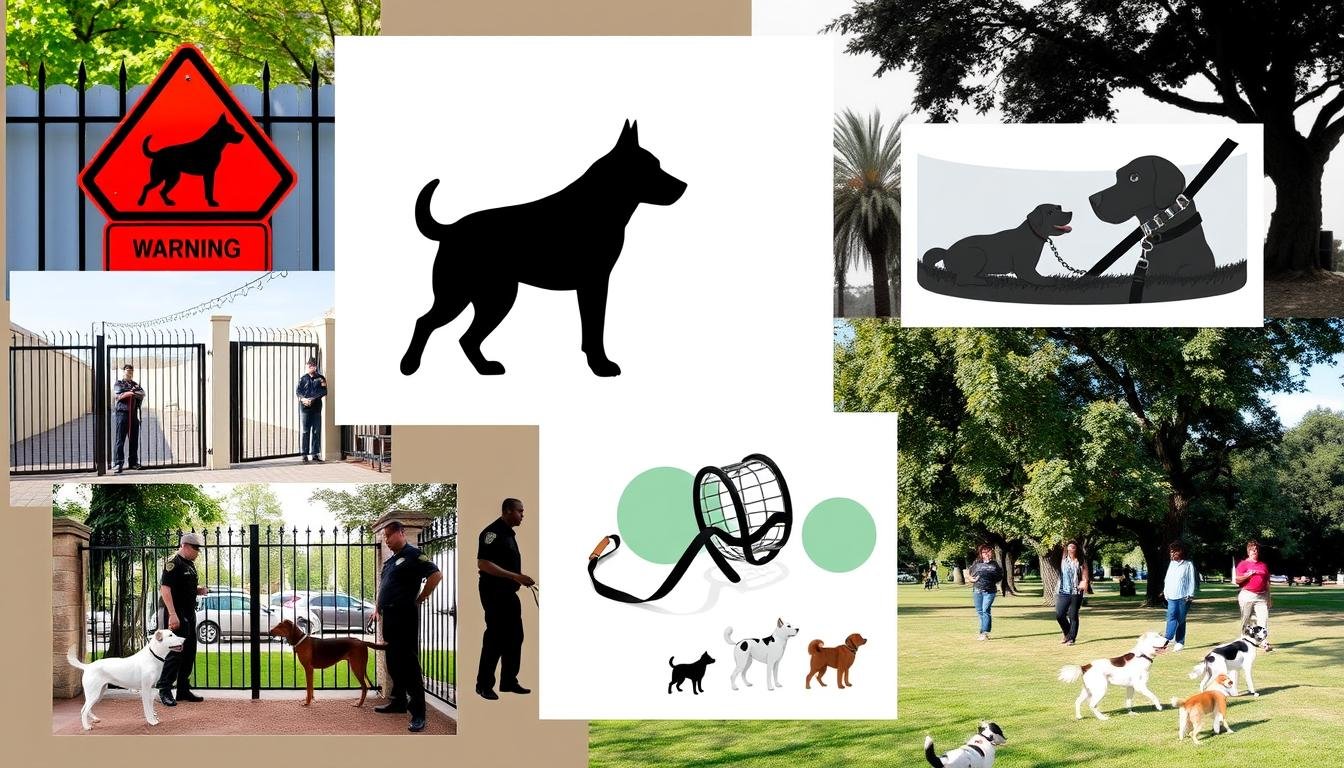
Vicious Dog Laws California: Legal Guidelines 2024
In California, pet owners need to know the latest about vicious dog laws. These rules, updated for 2024, protect everyone while telling dog owners what they must do. Knowing these laws helps owners avoid trouble and keep their dogs safe.

Key Takeaways
- California’s vicious dog laws define the criteria for classifying a dog as dangerous or potentially dangerous.
- Breed-specific considerations and behavioral assessments play a crucial role in determining a dog’s legal status.
- Pet owners face mandatory insurance requirements, registration protocols, and safety measures to prevent incidents.
- Non-compliance can result in severe penalties, including fines and potential seizure of the animal.
- Preventive measures, such as proper containment and public space regulations, are essential to ensuring public safety.
Understanding California’s Definition of Dangerous Dogs
In California, what makes a dog “dangerous” is very clear. A dog is considered dangerous if it has hurt someone or another animal, or if it seems likely to do so. The state’s rules for this are detailed and cover many points.
Legal Classification Criteria
California law says a dog is “dangerous” if it has acted in a way that made someone defend themselves twice without being provoked. Also, a dog that has bitten or attacked someone, even once, can be seen as dangerous.
Breed-Specific Considerations
California doesn’t blame certain dog breeds for being dangerous. Instead, it looks at each dog’s actions and past, no matter its breed. This approach is reflected in the state’s laws.
Behavioral Assessment Standards
California uses a detailed behavior assessment to decide if a dog is dangerous. They look at the dog’s personality, how it interacts with others, and any past aggressive behavior. This assessment is key in figuring out if a dog is considered dangerous.
California’s laws aim to keep everyone safe while also protecting dog owners who are responsible. They do this by being clear about what makes a dog dangerous and focusing on the dog’s actions, not its breed.
Vicious Dog Laws California: Key Regulations and Statutes
California’s dog bite laws and vicious animal statutes are key to keeping everyone safe. The state’s strict liability dog bite law makes owners responsible for any harm their dogs cause. This rule applies even if the dog has never shown aggression before.
California also has rules for dangerous animals. These laws cover how to own, register, and keep vicious dogs. The goal is to lower the chance of attacks and encourage legal dog ownership.
- California’s dog bite law makes owners responsible for any harm their dogs cause. This rule applies even if the dog has never shown aggression before.
- Dangerous animal control ordinances require the registration, licensing, and proper containment of vicious dogs. There are specific rules for fencing, signage, and other safety measures.
- Breed-specific legislation, which targets certain dog breeds deemed more prone to aggression, is a controversial aspect of California’s vicious dog laws. It has been the subject of ongoing debate.
It’s important for both pet owners and the public to understand California’s dog bite laws and vicious animal statutes. These rules help balance the rights of dog owners with the safety of the community.
“Responsible pet ownership and compliance with vicious dog laws are essential to maintaining a safe and harmonious community for all.”
Owner Responsibilities and Legal Obligations
In California, dog owners must ensure their pets behave and are safe. This means following strict rules on dog owner liability, pet insurance California, and dog registration requirements. Not following these laws can lead to serious penalties.
Mandatory Insurance Requirements
California requires insurance for dogs labeled as “dangerous” or “vicious”. The insurance must cover at least $100,000 for any damage or injuries. You must show proof of this insurance when registering your dog.
Registration and Licensing Protocols
- All dogs need to be registered with the local government and get a dog license.
- Owners of dangerous dogs must follow extra steps, like annual renewals and microchip implants.
- Keep records of your dog’s behavior, vaccinations, and your contact info ready for authorities.
Required Safety Measures
- Dangerous dogs must be in secure places when not with their owner.
- They must wear muzzles in public to prevent attacks.
- Put up warning signs on your property to alert visitors.
Being a responsible dog owner is key to keeping everyone safe. Learn about dog owner liability, pet insurance California, and dog registration requirements. This way, you can avoid legal trouble.
| Requirement | Details |
|---|---|
| Mandatory Insurance | Minimum $100,000 liability coverage |
| Registration and Licensing | Annual renewals, microchip implantation, detailed records |
| Safety Measures | Secure enclosures, muzzles in public, warning signs |
Penalties and Consequences for Non-Compliance
In California, pet owners who don’t follow the state’s vicious dog laws face serious penalties. These penalties aim to hold owners accountable and keep everyone safe.
One major consequence is dangerous dog penalties in the form of big fines. The fines can be from $500 to $1,000 for the first time. If it happens again, the fines get even higher.
But the legal consequences for pet owners don’t stop at money. If a dog hurts someone or kills them, the owner could face serious charges. This could mean jail time, probation, and even losing the dog.
| Violation | Penalty |
|---|---|
| Failure to properly contain a dangerous dog | $500 – $1,000 fine |
| Failure to properly license a dangerous dog | $500 – $1,000 fine |
| Failure to maintain required insurance for a dangerous dog | $500 – $1,000 fine |
| Dog attack resulting in injury or death | Misdemeanor or felony charges, potential jail time, dog confiscation or euthanasia |
Pet owners need to know how serious these legal consequences for pet owners are. They must make sure their dogs are safe, licensed, and insured. Following California’s vicious dog laws is not just a rule. It’s a way to protect everyone’s safety.
“Responsible pet ownership is not just a choice, but a legal obligation in California. Ignoring the vicious dog laws can have severe consequences for both the owner and the community.”
Prevention and Safety Requirements
In California, laws focus on keeping both people and pets safe. They require owners to take steps to prevent dangerous situations. This helps everyone live together peacefully.
Containment Specifications
California has strict rules for dog owners. They must keep their dogs locked up at all times. This includes using the right fences and leashes to keep dogs from getting loose.
If owners don’t follow these rules, they could face serious penalties.
Public Space Regulations
In places like parks and sidewalks, there are rules for dogs. These rules might include wearing muzzles or using short leashes. They help keep everyone safe.
Owners must follow these rules closely to avoid trouble.
Warning Sign Requirements
California also has rules for warning signs. Owners of dangerous dogs must post clear signs on their property. These signs must be the right size and in the right place.
By following these rules, dog owners in California help keep their communities safe. They also show they care about their pets.
Legal Rights of Dog Owners
As a dog owner in California, you have legal rights that protect you and your dog. It’s important to know these rights when defending against dangerous dog accusations or dealing with pet ownership laws.
You have the right to contest if your dog is called “dangerous.” If authorities say your dog is dangerous, you can ask for a hearing. Here, you can show evidence to fight this label. This way, you can defend your dog’s reputation and protect your rights as a pet owner.
Also, California law lets dog owners seek legal representation in dangerous dog cases. An experienced lawyer can help a lot. They can understand due process, navigate the appeals process, and make sure your voice is heard.
“As a dog owner, your rights are just as important as your dog’s wellbeing. Don’t hesitate to assert your legal protections when facing challenging situations.”
Knowing your legal rights as a dog owner in California helps you protect your pet. It also helps you fight unfair accusations. Getting professional legal help can make your case stronger and protect your interests.

Reporting and Investigation Procedures
In California, it’s key to report dogs that might be dangerous. This helps keep everyone safe. You need to file a detailed report with local animal control. They will then start a deep investigation.
Filing a Dangerous Dog Report
To report a dog, contact your local animal control or police. Your report should have the date, time, and where it happened. Also, describe the dog’s actions. Any photos or videos can help your case.
Investigation Timeline
- Animal control starts an investigation quickly, usually in 10 to 14 business days.
- They collect more info, talk to people, and check the dog’s past.
- They decide based on what they find. Then, they tell the owner if the dog is “potentially dangerous” or “vicious.”
Appeal Process Steps
If the owner doesn’t agree with the dog’s classification, they can appeal. Here’s how:
- The owner must ask for a hearing in 10 to 14 days.
- At the hearing, the owner can share evidence and reasons why their dog is not dangerous.
- An independent officer will decide. They might agree or change the original decision.
Knowing how to report and investigate helps keep California safe. It encourages responsible pet ownership.
Local Municipality Variations
In California, laws about vicious dogs vary a lot between cities and counties. The state sets basic rules, but each place can have its own rules too. This means dog owners need to know the city-specific dog laws, county animal control regulations, and local dangerous dog ordinances for their area.
What’s okay in one place might not be in another. So, it’s key to learn about the laws in your area. This way, you can make sure you’re following the rules and keeping everyone safe.
There are many reasons why laws differ from place to place. Things like the community, safety concerns, and the dogs in the area can shape these laws. Keeping up with these rules is important for being a good dog owner in California.
| City | Dangerous Dog Ordinance | Breed Restrictions | Containment Requirements |
|---|---|---|---|
| Los Angeles | Requires owners of potentially dangerous dogs to obtain a special permit and adhere to strict safety protocols. | No breed-specific bans, but enforcement focuses on behavior and individual assessments. | Mandates that potentially dangerous dogs be kept in secure enclosures and muzzled in public. |
| San Diego | Defines a “vicious dog” based on specific behavioral criteria and imposes heavy fines and penalties for non-compliance. | Prohibits the ownership of certain “aggressive” breeds, including Pit Bulls, Rottweilers, and Doberman Pinschers. | Requires potentially dangerous dogs to be kept in escape-proof enclosures and wear muzzles when in public. |
| Sacramento | Focuses on owner responsibility, with strict liability laws for any injuries or property damage caused by a dog. | No breed-specific bans, but owners of certain breeds must carry higher liability insurance. | Mandates the use of secure leashes and muzzles for dogs deemed potentially dangerous. |
By knowing the local dangerous dog ordinances and keeping up with changes, dog owners in California can follow the law. This helps keep pets and the community safe.

Conclusion
California’s vicious dog laws aim to balance pet ownership with community safety. They protect the public while respecting dog owners’ rights. This balance is crucial in the Golden State.
At the core of these laws are key principles. These include clear definitions of dangerous dogs, what owners must do, and how laws are enforced. Understanding these rules helps pet owners meet their responsible pet ownership duties. This way, they help keep their neighborhoods safe.
The main goal of these laws is community safety measures. They cover everything from insurance and keeping dogs in to rules for public spaces. These laws show a detailed plan to reduce risks from dangerous dogs. By following these rules, we can create a place where pets and people both do well.
“Responsible pet ownership is not just a legal requirement, but a moral imperative. By keeping our furry companions safe and under control, we contribute to the peace and security of our communities.”
As we end our look at these laws, the message is clear. California’s vicious dog laws show the state’s dedication to both individual rights and the greater good. By living by this idea, we can build a future where pets and communities live in peace.
| Key Principles | Responsible Actions |
|---|---|
| Dangerous dog definitions | Adherence to containment and public space regulations |
| Owner obligations | Fulfillment of licensing, insurance, and safety requirements |
| Enforcement measures | Prompt reporting of incidents and compliance with investigations |
Resources and Further Information
California dog owners have many resources to help them. The California Department of Food and Agriculture provides info on local laws and licensing. They also have emergency contact numbers.
For legal help, the Animal Legal Defense Fund is a great place to start. They offer advice and support for dog owners facing legal issues.
There are also many educational resources on dog behavior and training. The American Kennel Club and the Humane Society of the United States are two examples. These organizations help dog owners understand their pets better and promote responsible dog ownership.
These resources can help with everything from reporting incidents to learning about dog care. By using these resources, dog owners can stay informed and keep their pets safe. This way, they can also follow California’s laws about vicious dogs.
FAQ
What is the purpose of California’s vicious dog laws?
California’s vicious dog laws aim to keep everyone safe. They set rules for dog owners, especially those with dangerous dogs.
How does California legally define a dangerous dog?
In California, a dangerous dog is defined by its past behavior and the severity of any attacks. Breed-specific factors are also considered.
What are the key regulations and statutes regarding vicious dogs in California?
California’s laws include a strict liability dog bite law. They also have rules for controlling and owning dangerous animals.
What are the legal responsibilities for owners of dangerous dogs in California?
Owners of dangerous dogs must have insurance and register their dogs. They also need to keep their dogs muzzled and in secure places.
What are the potential penalties for non-compliance with California’s vicious dog laws?
Breaking these laws can lead to fines and criminal charges. In some cases, dogs may be taken away or even put down.
What are the legal prevention and safety requirements for owners of dangerous dogs in California?
Owners must keep their dogs in safe enclosures and follow public space rules. They also need to post warning signs.
What are the legal rights of dog owners in California?
Dog owners in California can challenge their dog’s dangerous classification. They can also get legal help if needed.
How do I report a potentially dangerous dog in California?
To report a dangerous dog, contact animal control. They will investigate and explain the next steps and appeals.
How do local municipal laws differ from state-level vicious dog regulations in California?
Laws about vicious dogs can differ in different parts of California. It’s important for owners to check local laws, which might be different from state laws.
Where can I find additional resources and information on California’s vicious dog laws?
For more information, check out state and local animal control websites. You can also find legal help and educational materials on dog behavior.