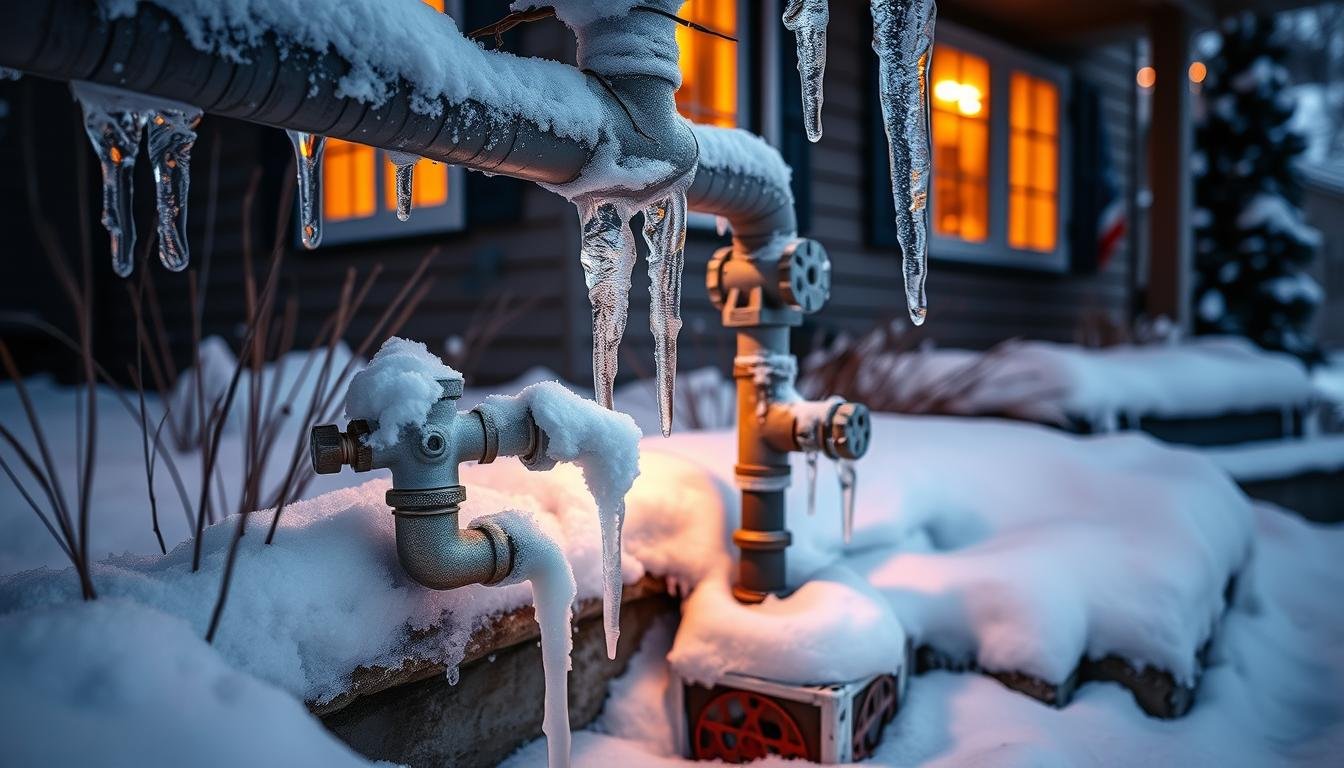
Cost to Winterize Plumbing: Complete Price Guide 2024
Winter is coming, and it’s time to protect your home’s plumbing. Winterizing your pipes can stop frozen and burst pipes. This guide will help you understand the costs in 2024, so you can keep your home safe and warm.
Winter is hard on your plumbing, especially when it freezes. Burst pipes can cause water damage and cost a lot to fix. By winterizing your plumbing, you can protect your home and avoid expensive repairs. We’ll look at what affects the cost, from professional services to DIY and regional prices.

Key Takeaways
- Comprehensive overview of plumbing winterization costs for 2024
- Breakdown of professional winterization services and DIY options
- Importance of winterization for home protection and preventing winter plumbing issues
- Regional price variations and factors affecting winterization costs
- Long-term cost benefits of proper winterization, including energy savings and reduced repair expenses
Understanding Plumbing Winterization and Its Importance
As winter gets closer, it’s key to get your home’s plumbing ready. Winterizing your plumbing means protecting your pipes and faucets from freezing. This step is vital to avoid the high costs of burst pipes and leaks.
Why Winterization Is Essential for Home Protection
When it gets cold, water in your pipes can freeze. Frozen pipes can burst, causing a lot of water damage and expensive fixes. Winterizing removes water and insulates parts, keeping them safe from cold.
Common Winter Plumbing Issues
- Frozen pipes that burst, causing water leaks and flooding
- Clogged drains and sewer lines due to ice buildup
- Malfunctioning water heaters and appliances
- Damaged outdoor faucets and sprinkler systems
Best Time to Winterize Your Plumbing
The best time to winterize your plumbing is before the first hard freeze. This usually happens in late fall or early winter. By taking steps to protect your plumbing from freeze protection and burst pipes prevention, you can avoid winter plumbing problems.
“Proper winterization of your home’s plumbing system can save you from costly water damage and repairs down the line.”
How Much Does It Cost to Winterize Plumbing
Getting your plumbing ready for winter is key to avoid expensive damage. The price to winterize plumbing changes based on if you get a pro or do it yourself. Also, where you live can affect the cost. Let’s look at what makes winterization prices different.
Professional Service Fees
Choosing a professional to winterize your home can give you peace of mind. The cost usually falls between $100 to $300, based on your home’s size and plumbing system. This price includes checking, draining, and insulating important parts, plus any small repairs needed.
DIY Winterization Expenses
If you want to do it yourself, the cost is much lower. You can buy what you need, like insulation and heat tape, for $50 to $150. But remember, doing it right takes time and effort to avoid future problems.
Regional Price Variations
| Region | Professional Winterization Cost | DIY Winterization Cost |
|---|---|---|
| Northeast | $150 – $350 | $75 – $200 |
| Midwest | $100 – $250 | $50 – $150 |
| South | $80 – $200 | $40 – $120 |
| West | $120 – $300 | $60 – $180 |
The table shows that winterizing plumbing costs can change a lot based on where you live. Things like labor costs, material prices, and how cold it gets in your area all play a part.
Knowing what affects winterization costs helps homeowners decide what’s best for them. Whether you hire a pro or do it yourself, winterizing is crucial to protect your home from winter’s worst.
Breakdown of Professional Winterization Services
Hiring a professional plumber is key to getting your home ready for winter. They offer plumber winterization services to protect your pipes and fixtures from cold weather damage.
Professional pipe insulation is a main service. Plumbers check your exposed pipes and insulate them to prevent freezing and bursting. They might suggest special insulation for better protection.
Drain-and-dry services are also part of winterization. Plumbers drain water from pipes, faucets, and appliances to avoid frozen and burst pipes. They might also suggest installing shut-off valves or making other changes to improve winter performance.
Other services plumbers provide include:
- Inspecting and sealing any cracks or gaps in the plumbing system to prevent cold air infiltration
- Checking and maintaining the functionality of your home’s heating system, as it plays a crucial role in protecting the plumbing
- Providing recommendations for additional winterization measures, such as insulating exterior faucets or wrapping exposed pipes
By hiring a qualified professional for plumbing winterization, you can rest easy. Your home’s pipes and fixtures will be safe from winter’s harsh weather.
Essential Materials and Tools for Plumbing Winterization
As winter gets closer, it’s key to winterize your plumbing to avoid damage and disruptions. You’ll need the right materials and tools for this. This includes insulation and specialized equipment to get your plumbing ready for the cold.
Insulation Materials and Costs
Insulating exposed pipes is a great way to protect them from freezing. Popular materials include:
- Foam pipe insulation (average cost: $0.50-$2 per linear foot)
- Fiberglass pipe insulation (average cost: $1-$3 per linear foot)
- Rubber pipe insulation (average cost: $2-$5 per linear foot)
The cost depends on the type, thickness, and brand. Make sure to measure your pipes to figure out how much insulation you need.
Required Tools and Equipment
You’ll also need some tools and equipment for winterization:
- Pipe Faucet Covers (average cost: $5-$15 per cover)
- Pipe Heating Tape (average cost: $20-$50 per roll)
- Outdoor Faucet Covers (average cost: $10-$25 per cover)
- Drain Plugs or Covers (average cost: $5-$15 per plug/cover)
- Plumber’s Wrench (average cost: $10-$30)
- Duct Tape (average cost: $3-$8 per roll)
Where to Purchase Supplies
You can buy what you need at plumbing supply stores, hardware stores, or online. Look for the best prices and read reviews to find the right place for you.

Winterizing your plumbing now can save you money later. By getting the right pipe insulation materials and winterization tools, your plumbing will be ready for winter.
Professional vs DIY Winterization: Cost Comparison
Choosing between a pro or DIY winterization affects your budget. We’ll look at the costs of each option. This will help you pick the best choice for your home.
Professional Winterization Services
Getting a pro to winterize your home is easy and thorough. The cost usually ranges from $100 to $300, based on your home’s size and plumbing system. This includes checking your pipes, insulating them, and preparing certain parts for winter.
DIY Winterization Approach
If you’re handy, doing it yourself can save money. DIY winterization materials and tools cost about $50 to $150. You’ll need insulation, heat tape, and faucet covers. But, make sure you know how to do it right to avoid future problems.
| Comparison | Professional Winterization | DIY Winterization |
|---|---|---|
| Average Cost | $100 – $300 | $50 – $150 |
| Expertise | Experienced plumbers with specialized knowledge | Requires homeowner’s DIY skills and understanding |
| Convenience | Hands-off, professional service | Time and effort required by homeowner |
| Warranty/Guarantee | Typically includes a warranty or guarantee on the work | No professional warranty or guarantee |
Choosing between a pro and DIY depends on your budget, skills, and comfort level. Weighing the costs and your needs will help you make a smart choice. This way, you can protect your plumbing without spending too much.
Factors Affecting Winterization Costs
Winterizing your plumbing system can cost a lot. Several factors affect these costs. Knowing these can help you plan your budget better.
House Size and Plumbing Complexity
The size of your home and plumbing system’s complexity matter a lot. Bigger homes need more time and materials, which raises prices. Older homes or those with complex pipes face extra challenges, making costs higher.
Geographic Location Impact
The climate and location of your home also affect winterization costs. Areas with very cold winters need more protection, like extra insulation. Labor costs also vary by location, adding to the total cost.
Age of Plumbing System
The age of your plumbing system is another big factor. Older systems are more likely to get damaged and need more work to protect them in winter. Newer systems, being better designed for cold weather, cost less to winterize.
| Factor | Impact on Winterization Costs |
|---|---|
| House Size and Plumbing Complexity | Larger homes and more intricate plumbing systems generally require higher costs for materials and labor. |
| Geographic Location | Regions with harsher winters may necessitate additional insulation, equipment, and specialized labor, resulting in higher expenses. |
| Age of Plumbing System | Older plumbing systems may be more prone to damage and require more extensive winterization measures, leading to higher costs. |
Understanding these factors helps homeowners plan for winterizing their plumbing. This ensures their homes stay safe and warm during the cold months.

Additional Winter Protection Measures and Their Costs
Basic winterization is key, but there’s more to protect your plumbing from cold weather. Heat tape and smart home tech offer extra defense. These steps add a layer of protection against freezing pipes.
Heat Tape Installation
Heat tape, or heat cable, is a top pick for keeping pipes from freezing. It wraps around pipes and uses electricity to keep them warm. The cost varies, from $50 to $300 for each 10-foot section, based on quality and the number of pipes.
Smart Thermostats for Winterization
Smart thermostats are a smart move for winter. They let you control your home’s temperature from afar. This keeps your heating system running right, preventing pipes from freezing. Prices range from $100 to $300, with installation adding $50 to $150 more.
Outdoor Faucet Covers
Outdoor faucets need protection in winter. Outdoor faucet covers fit over the spigot to block cold air. They cost $5 to $20 each, making them a budget-friendly option.
Adding these winter protection steps can keep your home safe from winter’s worst. They prevent expensive repairs and water damage. The costs are worth it for the peace of mind and long-term benefits.
Long-term Cost Benefits of Proper Winterization
Investing in proper plumbing winterization can save you a lot of money in the long run. It protects your home’s pipes and fixtures from damage. This way, you avoid expensive repairs and enjoy better energy efficiency during the cold months.
Preventing Expensive Repairs
Frozen pipes can cause a lot of damage and emergencies in winter. If you don’t winterize, you might face burst pipes and leaks. These problems can cost thousands to fix. But, by insulating pipes and draining water, you can avoid these issues and keep your plumbing system working well for years.
Energy Savings Benefits
Winterization also helps you save on energy costs. It keeps your home warm by insulating pipes and sealing leaks. This means your heating system works better, saving you money on bills. The savings from energy efficiency can pay for the initial winterization cost, making it a wise choice for homeowners.
FAQ
What is the importance of plumbing winterization?
Plumbing winterization keeps your home safe from winter damage. It stops pipes from freezing and bursting. This saves you money on costly repairs.
When is the best time to winterize your plumbing?
Winterize your plumbing in the fall, before the first freeze. This gets your pipes ready for winter’s cold.
How much does it cost to have a professional winterize your plumbing?
Professional winterization costs vary. It depends on your home’s size, plumbing system, and location. Prices usually range from $100 to $500 or more.
What are the typical services included in professional plumbing winterization?
Services include draining pipes, insulating exposed pipes, and shutting off the main water supply. Some may also install heat tape or cover outdoor faucets.
What materials and tools are needed for DIY plumbing winterization?
You’ll need insulation, heat tape, faucet covers, and shut-off valves. Tools like a wrench, pliers, and a heat gun are also necessary. You can find these at hardware stores or plumbing shops.
How do the costs of professional and DIY winterization compare?
DIY winterization is cheaper, costing $50 to $200 or more. But, consider your skills and comfort level before deciding.
What factors can affect the overall cost of plumbing winterization?
Costs depend on your home’s plumbing size, location, and age. Larger or older systems need more work, increasing costs.
What are some additional winter protection measures beyond basic winterization?
Consider heat tape, smart thermostats, and outdoor faucet covers. These add extra protection against winter damage.
What are the long-term cost benefits of proper plumbing winterization?
Regular winterization saves money by avoiding expensive repairs. It also improves energy efficiency and lowers heating costs.